Heritage — Trogir
A captain’s guide to the Trogir archipelago
Five islands, a thousand years of stone, and the quiet coves only locals know how to find.
The Trogir archipelago is small enough to cross in a morning and old enough that every cove has a name in three languages. This is the route I take when guests ask for the slow version — the one that explains why we still sail here.
The shape of the water
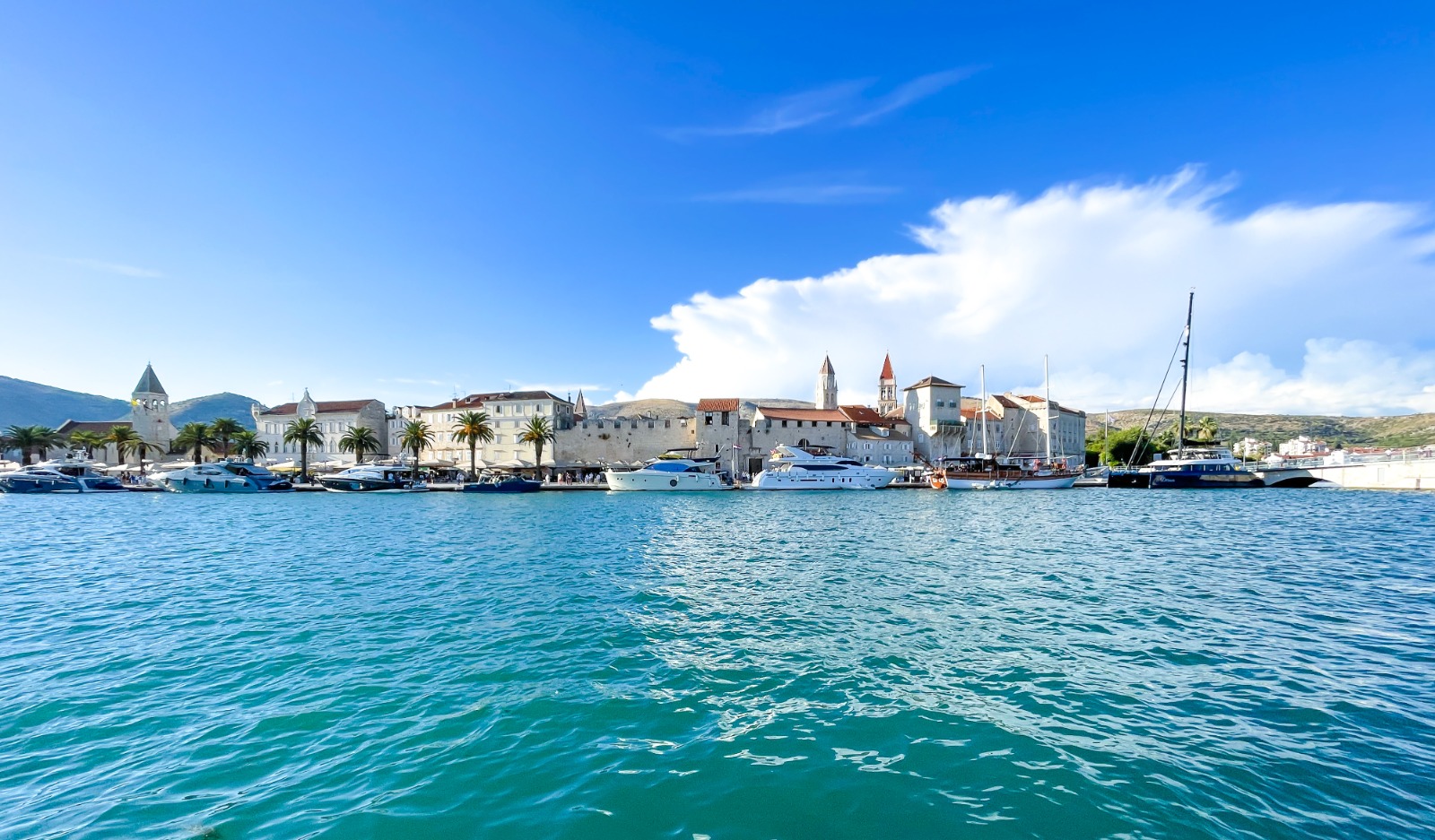
From Trogir Riva the channel opens west toward Drvenik Veli and Drvenik Mali, north toward Šolta, and south around the long flank of Čiovo. Five islands, depending on how you count, sit inside an hour of slow cruising. They are the bones of every itinerary we run.
The water between them is rarely deep. Most of what you’re looking at is between 15 and 40 metres — shallow enough that the colour shifts from cobalt to turquoise in the space of an afternoon, depending on the angle of the sun and the way the wind is brushing the surface.
Drvenik Veli and the Blue Lagoon
The Krknjaši lagoon, on the eastern side of Drvenik Veli, is the most photographed stretch of water in the archipelago. The colour is real — it comes from a clean, shallow sandy seabed protected by two small islets — but it deserves a slower visit than most boats give it.
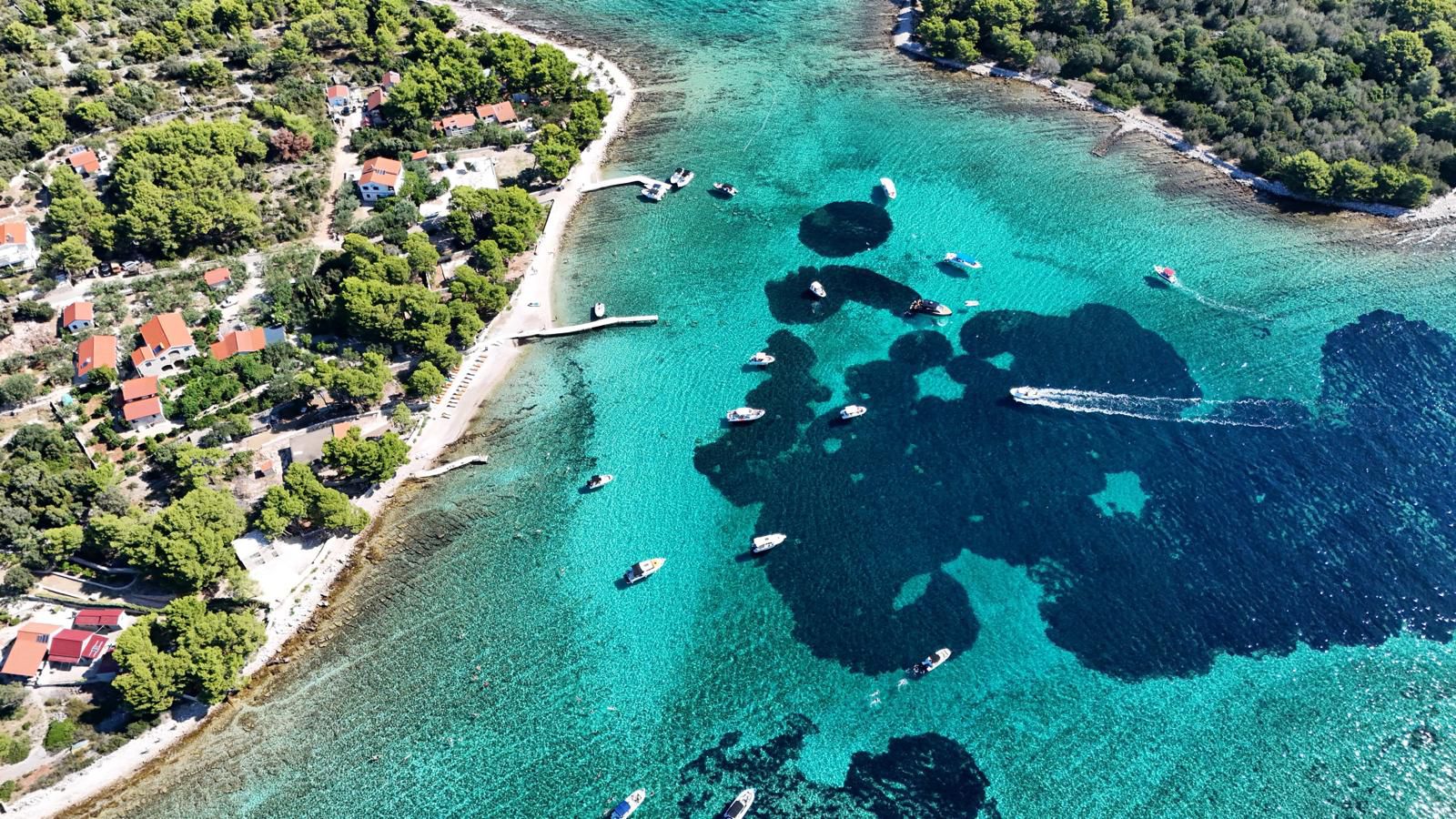
We anchor early, before the larger party boats come through after eleven. The first hour is for swimming and snorkelling; the second is for understanding what you’re actually looking at — a fragile ecosystem that has changed measurably in the last twenty seasons.
Šolta and the village of Maslinica
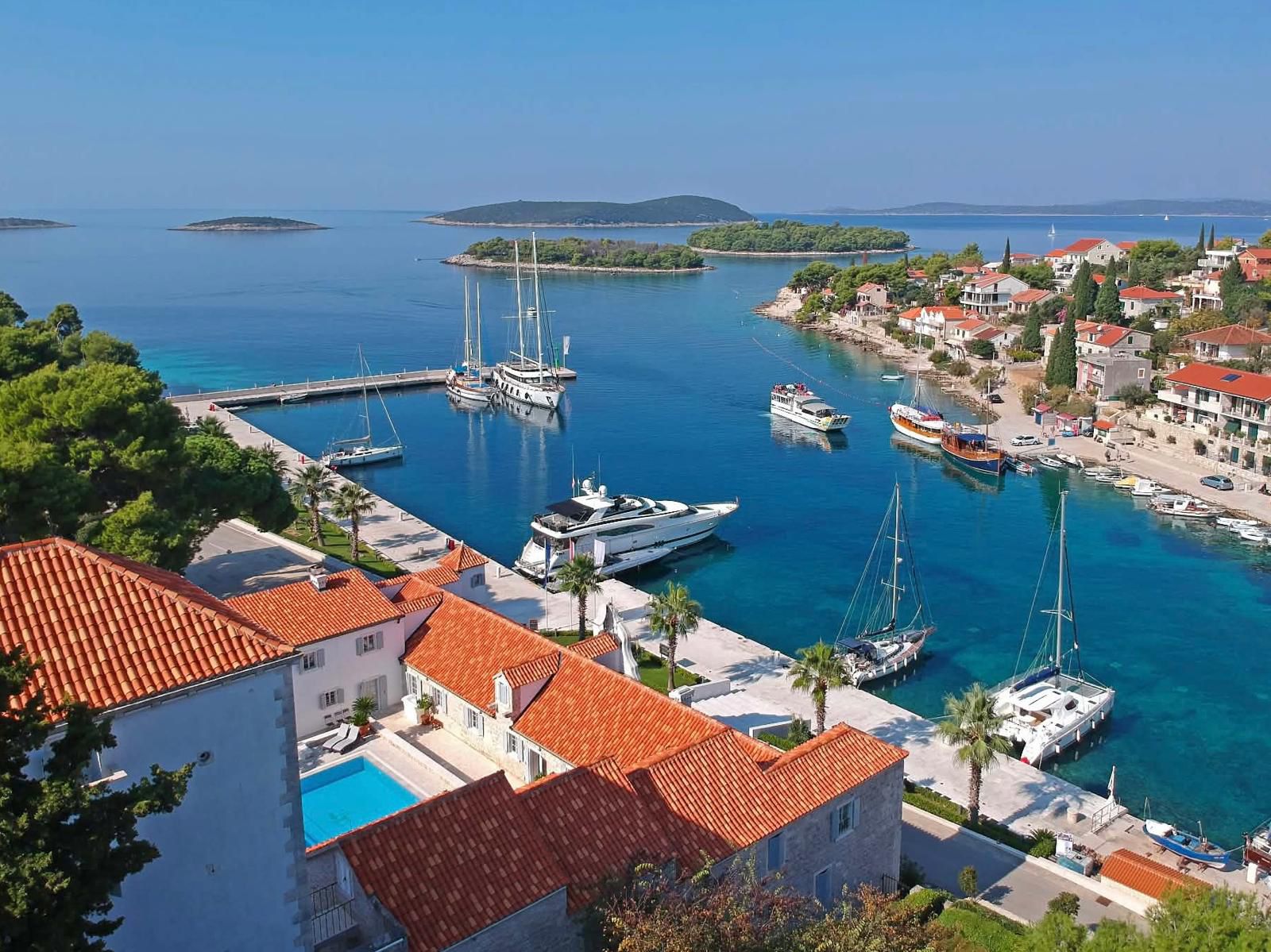
Maslinica sits on the western tip of Šolta around a small natural harbour ringed by seven islets. The village is built around the Martinis Marchi estate — a 1700s baroque castle that anchors the bay and, today, a hotel and marina that keep the working harbour alive.
Walk five minutes uphill from the waterfront and the village turns into something quieter: stone lanes, fig trees, an old olive press, three families that have lived on this hillside for two hundred years. This is the version of Šolta worth coming for.
“On Šolta time is measured in olive harvests, not seasons. If a tree gave well last year, the year is good.”
Čiovo, Branac cove and the OPG kitchens
Čiovo is connected to Trogir by a single bridge, but the south coast of the island feels nothing like the mainland. Branac is one of a string of small coves where family-run estates — OPGs in Croatian — keep olive groves, vines and almond trees that supply their own kitchens.
An OPG lunch is not a restaurant meal. It is a table set at the end of a working day in someone’s garden, with food that was on the tree or in the sea that morning. The slowness is the point.
How to plan the day
- Leave Trogir by 09:00 to reach Krknjaši before the lagoon fills up.
- Allow at least 90 minutes on land in Maslinica — the village rewards a slow walk.
- Lunch at an OPG on Čiovo is the right close to the day, not a side stop.
- Plan to be back on Trogir Riva by 16:45 — the light on the cathedral is best then.